
Painting and coating machines are advanced industrial systems engineered to apply uniform layers of paint, varnish, or specialized protective coatings onto substrates such as metal, wood, and plastic. By transitioning from manual application to automated industrial coating, manufacturers can achieve superior consistency, minimize material waste, and significantly enhance production efficiency.
These systems utilize precise techniques—including spraying, rolling, and dipping—to deliver high-quality surface finishing that meets the rigorous standards of sectors like automotive manufacturing and aerospace.
Modern coating machinery serves two primary objectives:
Aesthetic Enhancement: Delivers a flawless, uniform color and gloss finish, essential for consumer-facing products like furniture and automotive parts.
Functional Protection: Adds critical performance layers, providing corrosion resistance, waterproofing, UV protection, and antibacterial properties to extend product lifespan.
To ensure consistent quality and adhesion, industrial coating machines follow a structured workflow:
Surface Preparation: The process begins with cleaning and priming the substrate to remove contaminants and optimize coating adhesion.
Precision Application: Coatings are applied using automated technologies such as robotic spray guns, roll coaters, or immersion tanks.
Process Control: Advanced software regulates critical parameters like paint flow rate, pressure, and spray angle to ensure accuracy and repeatability.
Drying and Curing: The system incorporates energy-efficient thermal or UV curing processes to rapidly dry coatings, speeding up the production cycle.
Different substrates and geometries require specific application methods. Below are the most common industrial configurations:
Utilizing manual or robotic nozzles, these systems atomize liquid paint to create a smooth, even finish. They are highly versatile and suitable for complex 3D shapes.
Ideal for flat surfaces such as panels and sheets. This method applies coatings directly via rollers, ensuring high speed and material efficiency.
Objects are fully immersed in a liquid coating tank. This technique guarantees complete coverage, including hard-to-reach internal cavities.
Specialized robotic systems handle intricate geometries with extreme precision. They are pivotal in modern “Smart Factories” for reducing human error and exposure to hazardous fumes.
Investing in automated painting and coating machinery offers significant ROI through:
Consistency & Quality: Automation guarantees uniform layer thickness, eliminating the variability of manual labor.
High-Speed Productivity: Automated lines can handle large production volumes continuously, reducing bottlenecks.
Material Efficiency & Waste Reduction: Precision application reduces overspray and material usage, directly lowering operational costs.
Sustainability & Compliance: Modern systems support eco-friendly water-based paints and feature closed-loop recovery systems, significantly lowering VOC emissions and environmental impact.
High-performance coating systems are pivotal to global supply chains, fulfilling both functional and aesthetic requirements in:
Automotive Industry (Car bodies and components)
Furniture Manufacturing (Wood finishing)
Electronics & Aerospace (Protective circuit and fuselage coatings)
Medical Devices (Sterile and biocompatible coatings)
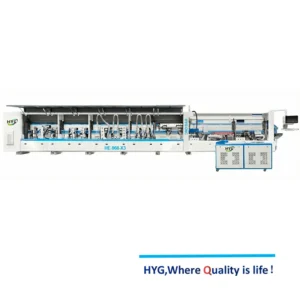
Discover the benefits of HYG Industrial Painting and Coating Machines and take your woodworking projects to the next level.


Painting and coating machines are advanced industrial systems engineered to apply uniform layers of paint, varnish, or specialized protective coatings onto substrates such as metal, wood, and plastic. By transitioning from manual application to automated industrial coating, manufacturers can achieve superior consistency, minimize material waste, and significantly enhance production efficiency.
These systems utilize precise techniques—including spraying, rolling, and dipping—to deliver high-quality surface finishing that meets the rigorous standards of sectors like automotive manufacturing and aerospace.
Modern coating machinery serves two primary objectives:
Aesthetic Enhancement: Delivers a flawless, uniform color and gloss finish, essential for consumer-facing products like furniture and automotive parts.
Functional Protection: Adds critical performance layers, providing corrosion resistance, waterproofing, UV protection, and antibacterial properties to extend product lifespan.
To ensure consistent quality and adhesion, industrial coating machines follow a structured workflow:
Surface Preparation: The process begins with cleaning and priming the substrate to remove contaminants and optimize coating adhesion.
Precision Application: Coatings are applied using automated technologies such as robotic spray guns, roll coaters, or immersion tanks.
Process Control: Advanced software regulates critical parameters like paint flow rate, pressure, and spray angle to ensure accuracy and repeatability.
Drying and Curing: The system incorporates energy-efficient thermal or UV curing processes to rapidly dry coatings, speeding up the production cycle.
Different substrates and geometries require specific application methods. Below are the most common industrial configurations:
Utilizing manual or robotic nozzles, these systems atomize liquid paint to create a smooth, even finish. They are highly versatile and suitable for complex 3D shapes.
Ideal for flat surfaces such as panels and sheets. This method applies coatings directly via rollers, ensuring high speed and material efficiency.
Objects are fully immersed in a liquid coating tank. This technique guarantees complete coverage, including hard-to-reach internal cavities.
Specialized robotic systems handle intricate geometries with extreme precision. They are pivotal in modern “Smart Factories” for reducing human error and exposure to hazardous fumes.
Investing in automated painting and coating machinery offers significant ROI through:
Consistency & Quality: Automation guarantees uniform layer thickness, eliminating the variability of manual labor.
High-Speed Productivity: Automated lines can handle large production volumes continuously, reducing bottlenecks.
Material Efficiency & Waste Reduction: Precision application reduces overspray and material usage, directly lowering operational costs.
Sustainability & Compliance: Modern systems support eco-friendly water-based paints and feature closed-loop recovery systems, significantly lowering VOC emissions and environmental impact.
High-performance coating systems are pivotal to global supply chains, fulfilling both functional and aesthetic requirements in:
Automotive Industry (Car bodies and components)
Furniture Manufacturing (Wood finishing)
Electronics & Aerospace (Protective circuit and fuselage coatings)
Medical Devices (Sterile and biocompatible coatings)
Discover the benefits of HYG Industrial Painting and Coating Machines and take your woodworking projects to the next level.
Leave your messing here,will get replay within 24 hours